
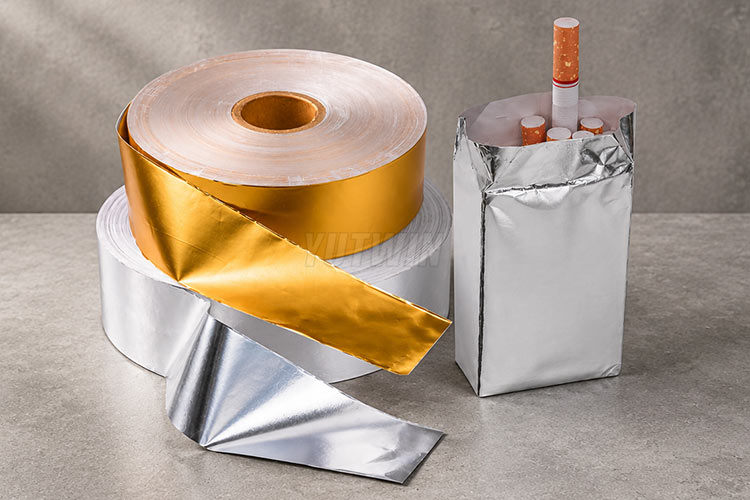
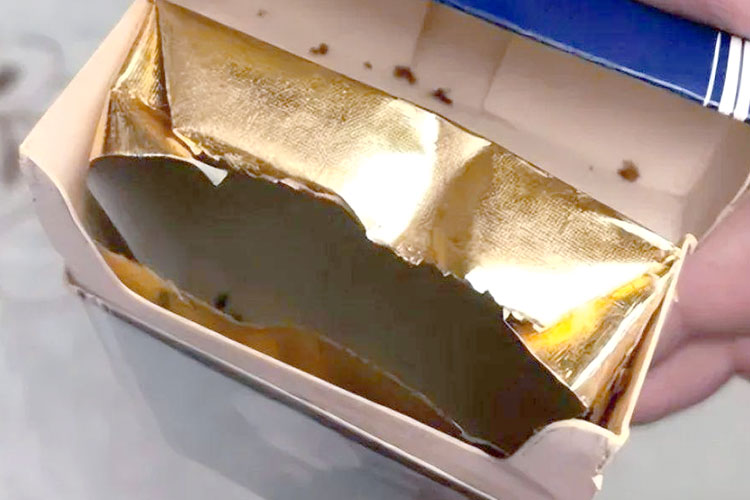
Cigarette foil is a specialized type of aluminum foil designed for use in the tobacco industry. It serves as an inner lining for cigarette packaging, providing a protective barrier that preserves the freshness, aroma, and flavor of tobacco. By preventing exposure to moisture, oxygen, and external contaminants, cigarette foil helps maintain product quality throughout storage and transport.
Description
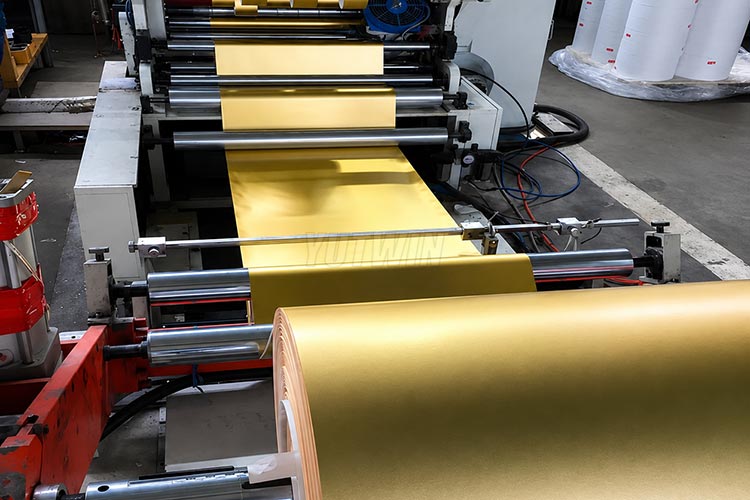
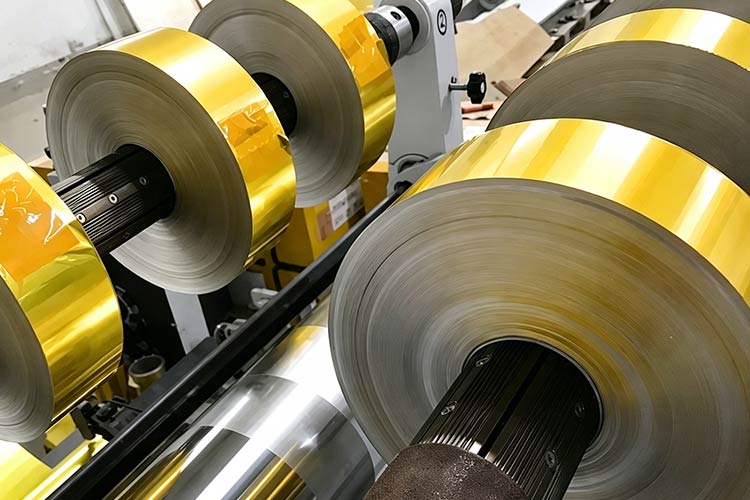
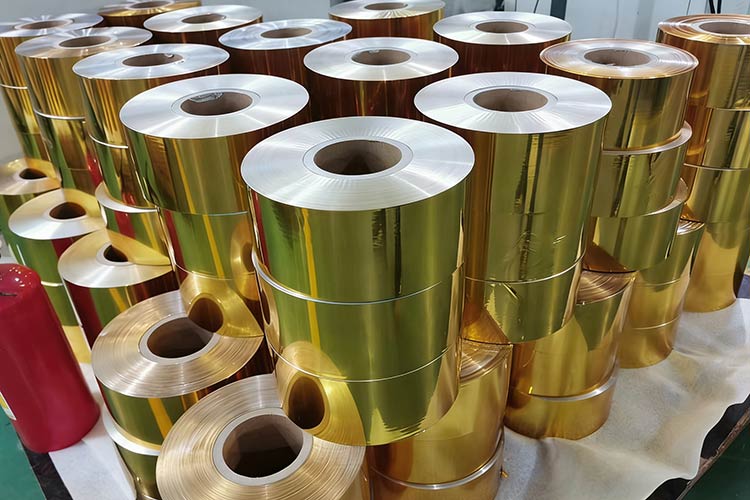
Yutwin New Materials’ precision rolling and annealing processes deliver excellent thickness uniformity, flexibility, and mechanical properties, making the foil well suited for continuous operation on high-speed cigarette packaging machines. While maintaining a lightweight structure, ultra-thin aluminum foil provides reliable moisture-vapor barrier, aroma retention, light-blocking, and odor-resistance properties for cigarette packaging, making it an essential barrier material for high-quality inner liner packaging. Its excellent thickness uniformity, controlled pinhole performance, and superior surface quality meet the stringent requirements of cigarette packaging for dimensional stability, processability, and lamination performance.
The Important Role of Aluminum Foil in Cigarette Production
Typically thin, lightweight, and highly flexible, cigarette foil can be laminated with paper or other materials to create airtight packs. Its excellent barrier properties, combined with ease of printing or embossing, also contribute to the aesthetic appeal and brand presentation of cigarette packs.
- Moisture & Humidity Barrier
Aluminum foil provides excellent resistance to water vapor penetration, effectively preventing moisture from entering the package and reducing the risk of tobacco becoming damp, moldy, or deteriorating.
- Aroma Retention
Its high barrier properties help minimize the loss of tobacco aroma while reducing the penetration of external odors, helping preserve the original aroma and flavor of cigarettes.
- Light Protection
Aluminum foil offers excellent light-blocking performance, reducing the potential effects of light exposure on tobacco components and aroma stability.
- Odor Barrier
The aluminum foil layer acts as an effective barrier against external odors, gases, and volatile substances, helping prevent unwanted odors from penetrating into the package.
- Improved Storage Stability
By limiting exposure to moisture, light, external gases, and odors, aluminum foil helps maintain cigarette quality during transportation and storage.
Cigarette Foil Raw Material Specifications
| Alloy | 1235 / 8079 |
| Temper | 1235-O |
| Thickness | 0.006–0.0065 mm |
| Width | 300–1800 mm |
| Tensile Strength | 80–90 MPa |
| Elongation | ≥1% |
| Pinhole – 0.006 mm | ≤500 pcs/mm² |
| Pinhole – 0.0063–0.0065 mm | ≤300 pcs/mm² |
| Surface Wetting Tension | A Grade |
| Surface Roughness | Ra ≤0.2 μm |
Cigarette Foil Composite Structure
Cigarette foil laminated paper typically features a multilayer structure consisting of a printing-compatible layer, an aluminum foil barrier layer, and a food-grade or safety-oriented base paper layer. These layers are laminated together to form a stable composite structure, combining barrier performance, printability, mechanical strength, and processing stability to meet the requirements of cigarette packaging applications.
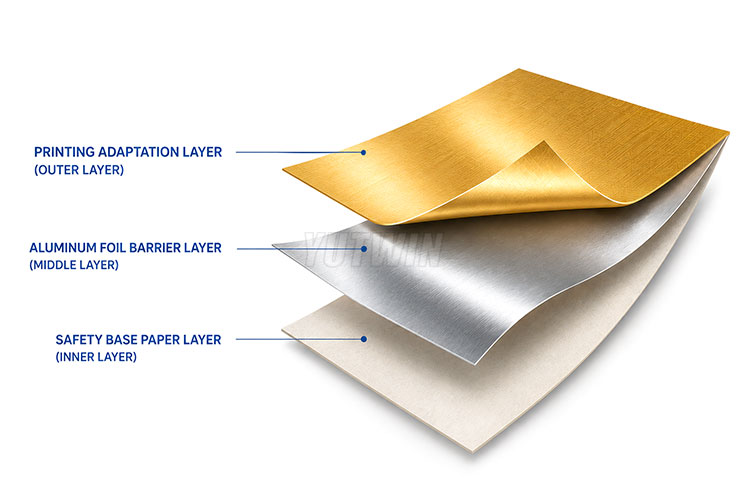
- Outer Layer
The outermost printing-compatible layer is designed to accommodate printing, surface decoration, and brand graphics. It can be specially treated according to the customer’s printing process and visual requirements.
- Middle Layer
The middle aluminum foil layer provides excellent barrier properties against moisture, oxygen, and light. It helps protect cigarettes from external environmental influences and contributes to maintaining product quality and aroma stability.
- Inner Layer
The innermost base paper layer is designed for direct or indirect contact with cigarettes. It places particular emphasis on cleanliness, odor control, and processing stability. Different grades of base paper can be selected according to the cigarette product and packaging equipment requirements.
Application Scenarios
- Conventional Cigarette Packaging
Used as an inner liner for standard cigarette packs, providing light, moisture, and barrier protection.
- Slim Cigarette Packaging
Suitable for slim and compact cigarette packs, with thickness, width, and laminate structure customizable according to pack dimensions and packaging equipment.
- Premium Cigarette Packaging
Designed for high-end cigarette products, offering enhanced surface appearance, printability, and packaging quality.
- Gift and Luxury Cigarette Packaging
Used as an inner liner for premium gift cigarette boxes, combining barrier protection with decorative and visual effects.
Long-Term Storage Requirements
- Cigarette foil laminated paper should be stored under controlled environmental conditions. During long-term storage, the warehouse environment should remain stable to minimize the risk of paper moisture absorption, material deformation, and changes in laminate performance caused by fluctuations in temperature and humidity.
- The recommended storage temperature is 15–25 °C, with relative humidity maintained at 40%–60%. The material should be stored indoors in a clean, dry, and well-ventilated environment, away from direct sunlight, rainwater, and condensation.
- The material should also be kept away from chemicals, inks, solvents, and other products with strong volatile odors to prevent the laminated paper from absorbing unwanted odors that could affect subsequent cigarette packaging applications.
- Products should be stored on pallets or other suitable supports and kept off the floor. The original packaging should remain intact whenever possible. During stacking, excessive or uneven pressure should be avoided. A recommended maximum stacking height is 2 m to reduce the risk of deformation caused by prolonged compression of the bottom rolls or sheets.
- For materials that have been opened but are not immediately used, the packaging should be properly resealed and protected against moisture and dust to minimize prolonged exposure to the production environment.
Machine-Running Precautions
- Maintain stable unwinding and winding tension and avoid sudden changes in tension.
- Match the machine running speed with the material structure and equipment capabilities.
- Keep guide rollers, pressure rollers, and other material-contact surfaces clean to prevent foreign particles from scratching the aluminum foil.
- Prevent material misalignment, wrinkling, and uneven local stress.
- Adjust printing, die-cutting, folding, and other downstream processes according to the actual material characteristics.
- If aluminum foil breakage, wrinkling, delamination, or edge damage occurs, promptly inspect the tension settings, temperature and humidity conditions, and machine operating status.