
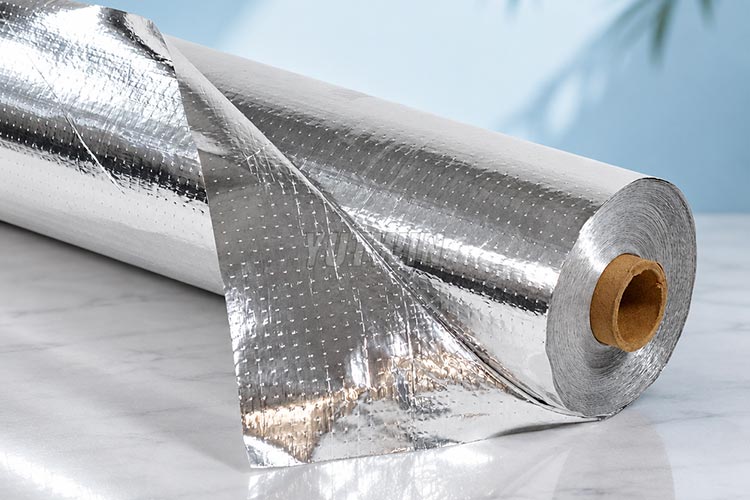
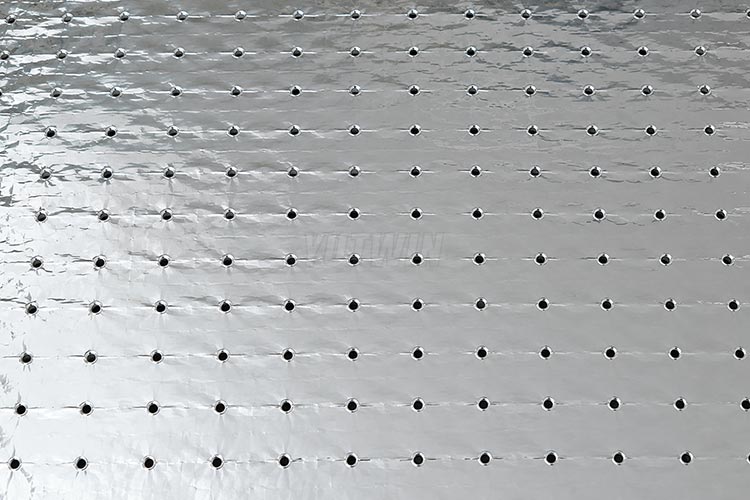
Perforated foil is a functional aluminum foil material with micropores or through holes processed on its surface according to specific pore diameters, spacings, and arrangements. It combines the lightweight, corrosion resistance, heat radiation reflection, and ease of processing inherent in aluminum foil with improved air permeability, sound transmission, filtration, and flow conduction properties through its porous structure. It is widely used in construction, thermal insulation, filtration, packaging, electronics, and industrial fields.
Description
Yutwin New Materials can customize products to meet specific customer end-use requirements.
- Aluminum foil alloys and thicknessesAperture and spacing
- Round, square, and irregular hole shapes
- Aperture ratio
- Roll width and length
- Gloss or matte finish
- Coated aluminum foil
- Aluminum foil composites with other materials
- Custom packaging and roll specifications
Common Specifications
| Item | Typical Options |
|---|---|
| Material | Aluminium / Aluminium Foil |
| Alloy | 1050 / 1060 / 3003 / 8011 or Customized |
| Foil Thickness | 0.006–0.009 mm |
| Hole Shape | Round / Square / Slotted / Customized |
| Hole Diameter | Customized according to requirements |
| Hole Pitch | Customized |
| Surface Finish | Mill Finish / Bright / Matte / Coated |
| Roll Width | Customized |
| Roll Length | Customized |
Composite Structure Selection
| Three-ways | Two-ways |
|---|---|
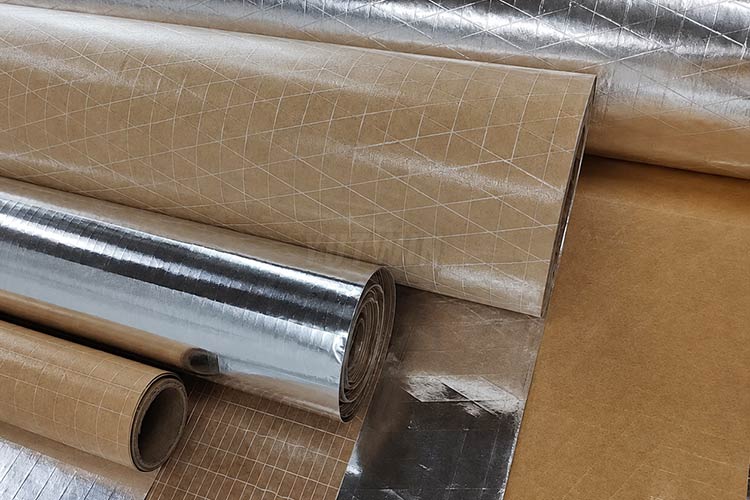
| Foil / 3 ways fiberglass Scrim / Kraft | Foil / 2 ways fiberglass Scrim / Kraft |
| MPET / 3 ways fiberglass Scrim / Kraft | MPET / 2 ways fiberglass Scrim / Kraft |
| Foil / Kraft / 3 ways fiberglass Scrim | Foil / Kraft / 2 ways fiberglass Scrim |
| MPET / Kraft / 3 ways fiberglass Scrim | MPET / Kraft / 2 ways fiberglass Scrim |
| Foil / 3 ways fiberglass Scrim / Kraft / Foil | Foil / 2 ways fiberglass Scrim / Kraft / Foil |
| MPET / 3 ways fiberglass Scrim / Kraft / MPET | MPET / 2 ways fiberglass Scrim / Kraft / MPET |
| MPET / 3 ways fiberglass Scrim / Kraft / Foil | MPET / 2 ways fiberglass Scrim / Kraft / Foil |
| Foil / 3 ways fiberglass Scrim / (white/black) PP | Foil / 2 ways fiberglass Scrim / (white/black) PP |
| MPET / 3 ways fiberglass Scrim / (white/black) PP | MPET / 2 ways fiberglass Scrim / (white/black) PP |
| Foil / 3 ways fiberglass Scrim / PE | Foil / 2 ways fiberglass Scrim / PE |
| MPET / 3 ways fiberglass Scrim / PE | MPET / 2 ways fiberglass Scrim / PE |
Applications of Perforated Aluminium Foil
- Thermal Insulation
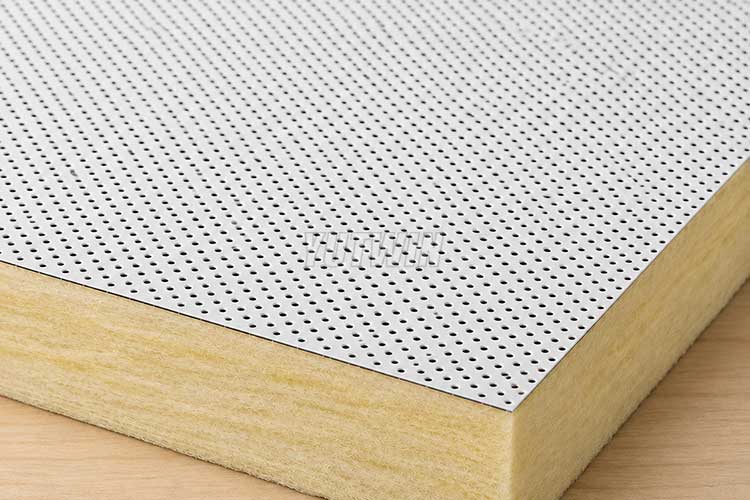
Perforated aluminium foil can be used as a facing or functional layer in insulation systems and laminated with materials such as glass wool, rock wool, ceramic fiber, and foam. The perforated structure allows air and moisture to pass through while the aluminium layer can still provide thermal radiation reflection.
- Building Materials
It can be incorporated into roofing, wall systems, ventilation structures, and building envelope materials where lightweight construction, ventilation, and corrosion resistance are required.
- HVAC and Ventilation Systems
The evenly distributed perforations provide controlled air passages, making perforated aluminium foil suitable for certain HVAC components, air distribution structures, and ventilation-related composite materials.
- Acoustic and Sound Absorption Materials
Perforated aluminium foil can be combined with acoustic insulation materials such as fiberglass, mineral wool, and other porous materials. The perforations allow sound waves to enter the underlying sound-absorbing layer, making it suitable for selected architectural and industrial acoustic applications.
- Filtration and Industrial Applications
With controlled hole size and open area, perforated aluminium foil can be used as a pre-filter layer, support layer, protective layer, or separator in industrial applications where lightweight construction and corrosion resistance are important.
- Packaging and Functional Materials
In certain food, industrial, and specialty packaging structures, perforated aluminium foil can provide controlled ventilation, moisture release, or media exchange. It can also be laminated with paper, plastic films, and other materials to create multifunctional packaging structures.