

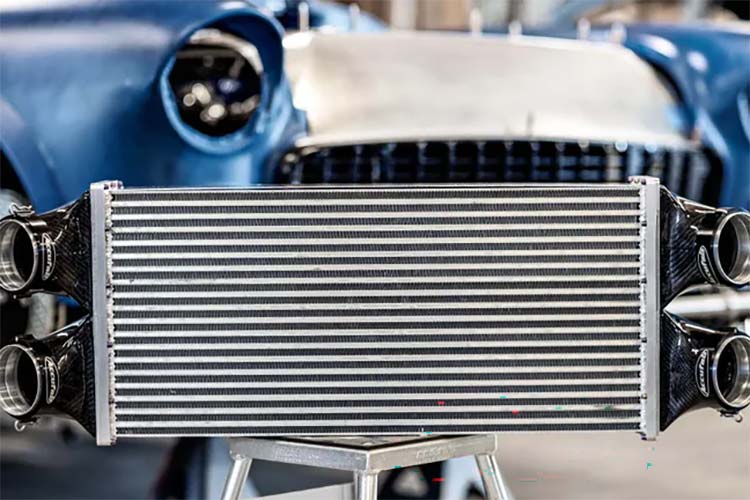
As the demand for automotive lightweighting and efficient thermal management continues to escalate, aluminum foil—distinguished by its exceptional thermal conductivity, formability, corrosion resistance, and lightweight properties—has emerged as a core material for automotive heat exchange systems. It is now widely utilized across the full spectrum of thermal management components in both traditional fuel-powered vehicles and new energy vehicles, providing critical support for vehicle heat dissipation, cooling, temperature control, and energy efficiency enhancement.
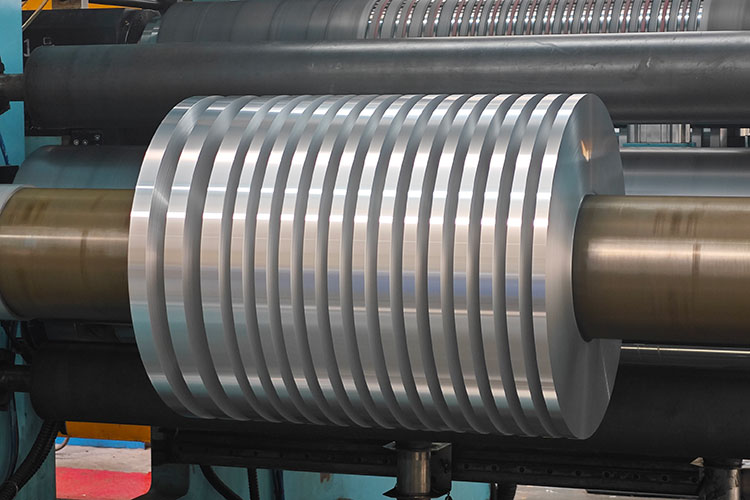

Specifications
| Item | Specification |
|---|---|
| Alloy | 1100, 1200, 3003, 3102 |
| Temper | O / H14 / H24 |
| Thickness | 0.08 – 0.20 mm |
| Width | 100 – 1250 mm |
| Inner Core Diameter | 76 mm / 150 mm |
| Coil Weight | Customized |
Application of Aluminum Foil in Thermal Exchange Systems of Traditional Fuel Vehicles
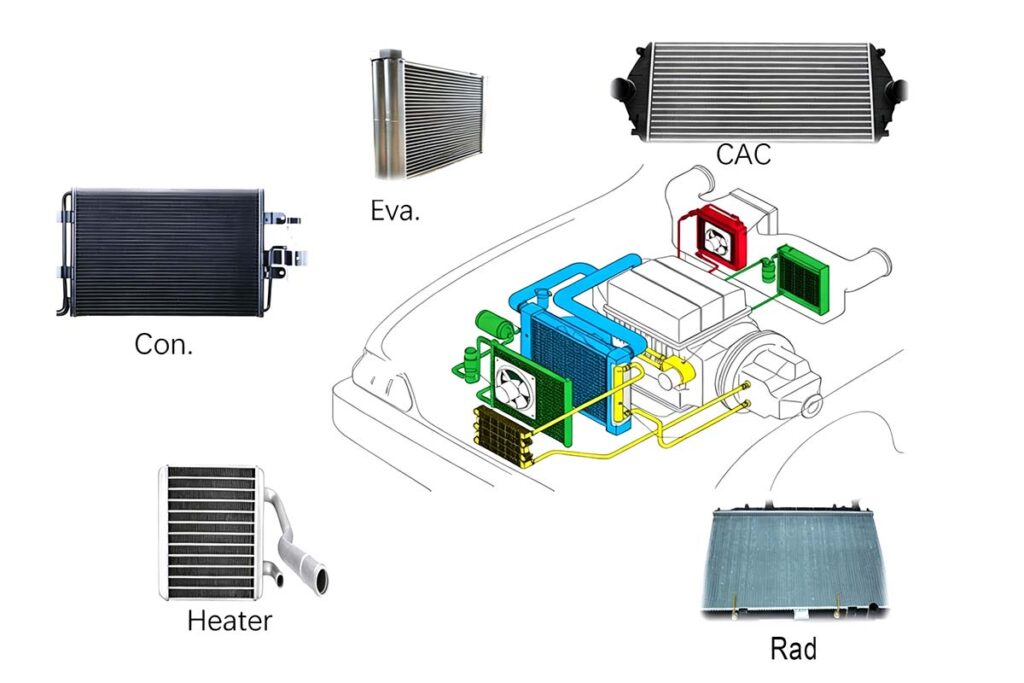
Thermal management of traditional fuel vehicles focuses on engine heat dissipation and air conditioning refrigeration and heating. Aluminum foil is mainly used for fins and core materials of various heat exchangers to meet the requirements of efficient heat exchange and structural stability.
- EVA (Evaporator)
As the core component of automotive air conditioning refrigeration, aluminum foil for evaporators requires excellent hydrophilicity, corrosion resistance and formability. It quickly absorbs heat inside the vehicle through a dense fin structure to achieve cooling and ensure efficient operation of the air conditioning system.
- Con. (Condenser)
It forms an air conditioning refrigeration circuit together with the evaporator. The condenser aluminum foil is responsible for heat dissipation of high-temperature refrigerant, quickly transferring heat to the outside air and ensuring the continuous and efficient operation of the refrigeration cycle, adapting to the working conditions of fuel vehicle air conditioning systems.
- CAC (Charge Air Cooler)
Designed for turbocharged engines, it utilizes the lightweight and high thermal conductivity of aluminum foil to cool high-temperature boosted air, improving intake air density and engine combustion efficiency, enhancing power output and reducing fuel consumption.
- Heater (Heater Core)
It realizes in-vehicle heating relying on engine waste heat. Heat exchange fins made of aluminum foil can efficiently transfer coolant heat, rapidly raising the in-vehicle temperature, balancing heating efficiency and structural lightweighting.
- Rad (Radiator)
The core of the fuel vehicle engine cooling system. Aluminum foil fins cooperate with water-cooled pipelines to efficiently dissipate heat from the engine block, preventing overheating failures and serving as a key material to ensure continuous engine operation.
Application of Aluminum Foil in Thermal Exchange Systems of New Energy Vehicles
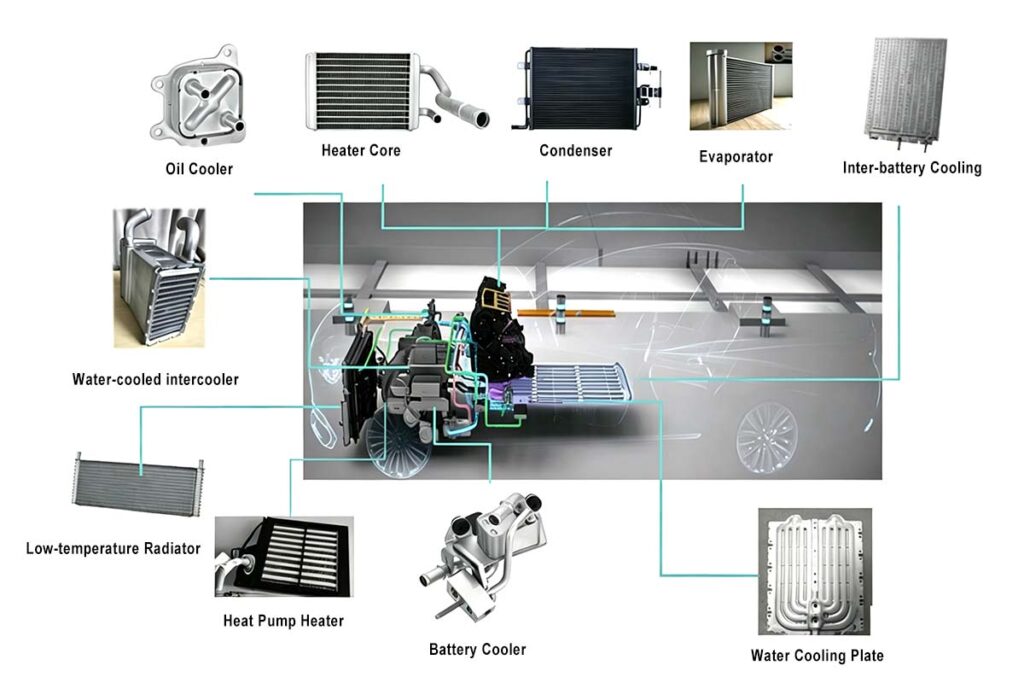
Thermal management of new energy vehicles focuses more on battery temperature control, heat pump system integration and overall thermal efficiency. The application scenarios of aluminum foil are further expanded, making it an important basic material for battery safety, riding comfort and range guarantee.
- Heater Core
Adapting to the lack of engine waste heat in new energy vehicles, it realizes in-vehicle heating with heat pump/PTC systems. With high-efficiency heat exchange performance, aluminum foil quickly transfers heat and improves heating response speed.
- Condenser
Serving the air conditioning and heat pump systems of new energy vehicles, aluminum foil fins enhance air-side heat exchange, ensuring efficient operation in refrigeration, dehumidification and heat pump heating modes.
- Evaporator
Responsible for in-vehicle refrigeration and cockpit cooling. Ultra-thin high-strength aluminum foil reduces component volume while ensuring heat exchange efficiency, adapting to the limited installation space of new energy vehicles.
- Inter-battery Cooling
In response to the temperature control requirements of power battery packs, heat exchange fins or sandwich structures made of aluminum foil evenly remove heat from cells during operation, avoiding local overheating, maintaining batteries in the optimal temperature range, and improving cycle life and safety.
- Low-temperature Radiator
Used for low-temperature heat dissipation of motors, electronic controls and batteries in new energy vehicles. The lightweight advantage of aluminum foil significantly reduces vehicle weight while ensuring efficient heat exchange under low-temperature working conditions, adapting to driving scenarios.
- Heat Pump Heater
As the core heat exchange component of the heat pump system, aluminum foil material enables rapid heat exchange, balancing winter heating and summer cooling, greatly improving heat pump system energy efficiency and reducing range loss.
- Water Cooling Plate
Mostly used for liquid-cooled heat exchange of battery packs, motors and electronic controls. Aluminum foil composite structures or composite aluminum water cooling plate fins balance thermal conductivity and structural strength, achieving precise and uniform temperature control to ensure stable operation of the three-electric systems.
Learn more about Finstock Aluminium Foil.