

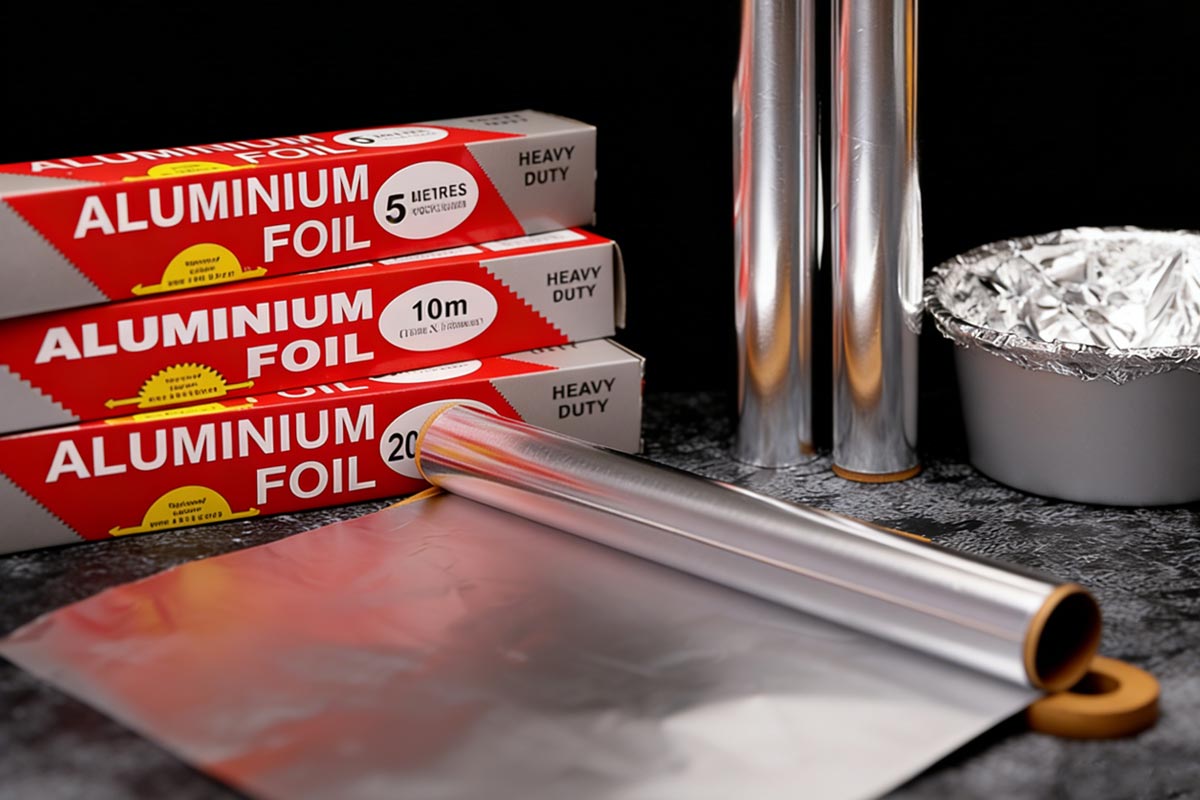
Grill aluminum foil is truly the unsung “behind-the-scenes hero.” It not only protects your food but also saves you hours of scrubbing the grill after cooking meat. Choosing the right aluminum foil for grilling depends on how you plan to use it—whether for wrapping heavy meats, lining grates, or cooking delicate fish. For most outdoor grilling, Heavy Duty is the industry standard because it resists the high heat and sharp edges that cause standard foil to melt or tear.
- High temperature resistant.
- Non-stick design.
- Even heat distribution.
- Oil and water resistant.
- Environmentally friendly and recyclable.

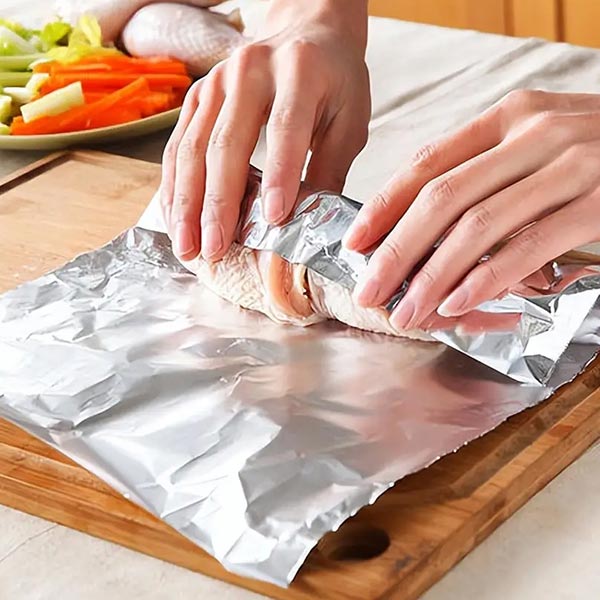
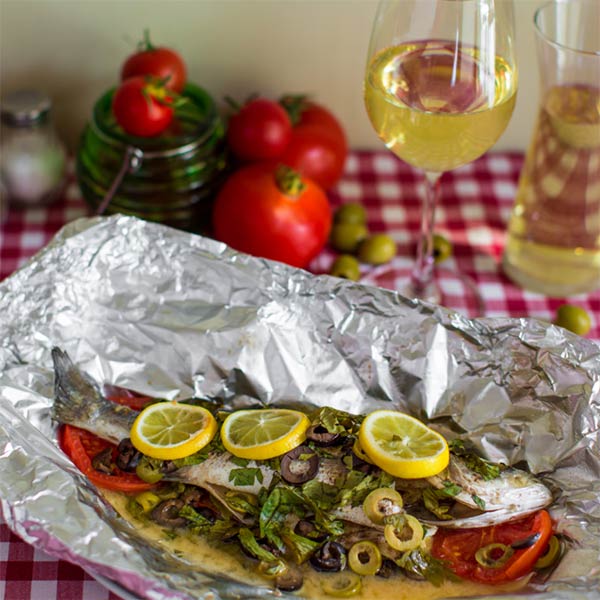
Why is aluminum foil indispensable for barbecuing?
- Locks in moisture
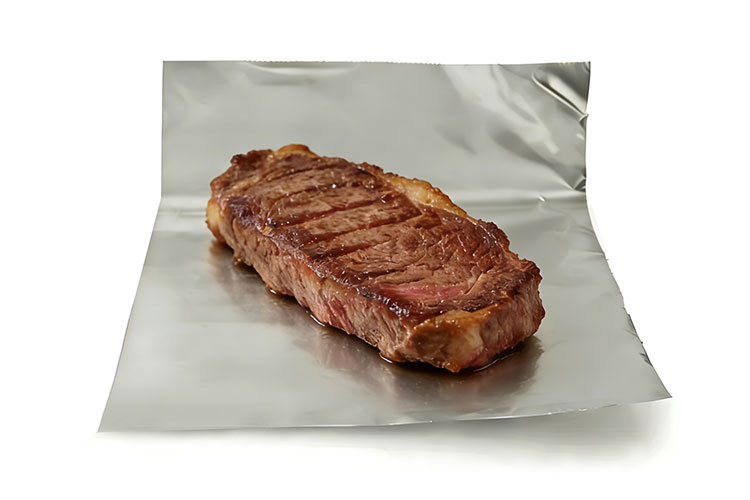
Wrapping meat (such as ribs or beef brisket) in aluminum foil creates a miniature “steamer,” preventing moisture loss during prolonged high-temperature cooking and resulting in a more tender texture.
- Prevents uneven heating
Aluminum foil has excellent thermal conductivity, helping to distribute heat evenly and preventing the food from being burnt on the outside while remaining undercooked on the inside.
- A cleaning savior
Placing it on the bottom of the grill or in the drip pan collects dripping grease and residue, allowing you to simply throw it away after grilling, saving you the hassle of cleaning.
- Prevents over-browning
When the surface of bread or large poultry (such as turkey) is already golden brown but the inside is not yet cooked, covering it with a layer of aluminum foil can prevent the surface from burning.
Key Factors to Consider
- Thickness (Gauge)
Grilling requires Heavy Duty (approx. 18–24 microns) or Extra Heavy Duty (over 25 microns) foil. Thinner standard foil (10–15 microns) is prone to puncturing from bones or metal tongs and can disintegrate under the intense heat of charcoal.
- Width
Standard 12-inch rolls are fine for small items like potatoes. However, 18-inch “Wide” rolls are preferred by pitmasters for wrapping full racks of ribs or briskets without needing leaky seams.
- Non-Stick Coating
If you are grilling delicate items like fish or sticky marinated wings, choose foil with a non-stick silicone coating. This prevents food from tearing when you try to lift it off the grill.
- Alloy Grade
Most high-quality grilling foils use Alloy 8011, which contains iron and silicon for better tensile strength and puncture resistance compared to the high-purity alloys used in thin kitchen wraps.
Statistics of Common Specifications
| Feature | Category | Details |
| Alloy Grade | 8011 | Most popular BBQ alloy (Al-Fe-Si) |
| 1235 | High purity alloy (min 99.35% Al) | |
| 8079 | Enhanced alloy | |
| Surface Finish | Shiny Side | Polished/Bright finish |
| Dull Side | Matte/Natural finish | |
| Thickness | Standard | 10 – 15 microns |
| Heavy Duty | 18 – 24 microns | |
| Extra Heavy | > 25 microns | |
| Width | Narrow | 300 mm (12 inch) |
| Standard | 450 mm (18 inch) | |
| Temper | O (Soft) | Fully Annealed |
Shiny side or dull side?
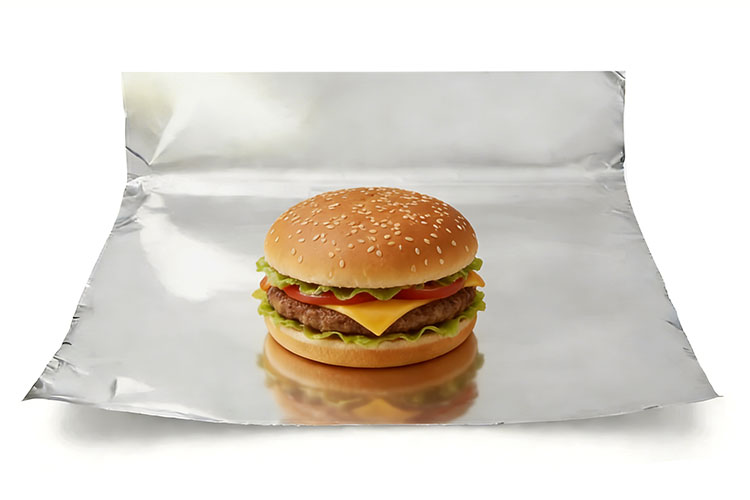
This is a classic debate. In fact, which side faces out has little effect on grilling performance. For standard foil, it doesn’t matter which side faces the food. However, for Non-Stick foil, the coating is applied to the dull side, so ensure that side is facing your food.
Shiny side
- Slightly more reflective, made bright during production when in contact with highly polished steel rolls.
Dull side
- Relatively rough.