
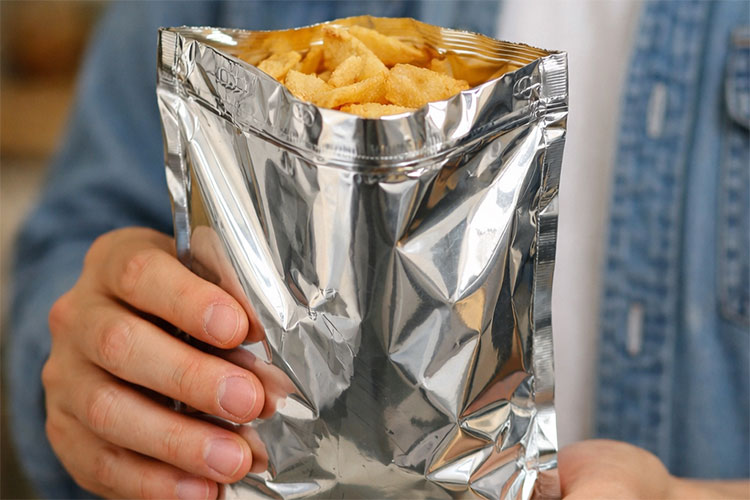
As a widely used packaging material in food, medicine, daily necessities and other fields, the safety of aluminum foil bags has always been the focus of public attention. In fact, when used correctly in line with national and international safety standards, aluminum foil bags generally do not cause direct harm to the human body. Their safety mainly depends on the quality of materials, the standardization of production processes and the rationality of usage scenarios. Aluminum foil itself is an ultra-thin sheet made of metallic aluminum through high-precision calendering. It has stable chemical properties, is not easy to react with common substances, and has excellent barrier performance—it can effectively block the intrusion of light, oxygen, moisture and external pollutants. Therefore, it is widely used in the packaging of products that need long-term preservation and anti-deterioration. It can not only extend the shelf life of items, but also better retain the original flavor and quality of products, making it one of the high-quality materials in the current packaging industry that are both practical and safe.
I. Analysis of the Safety of Aluminum Foil Bags
1. Compliance with Material Standards is the Foundation of Safety
Formally produced food-grade aluminum foil bags must strictly pass the testing and certification of relevant national and international safety standards. Among them, China’s core standard is “GB 4806.9-2016 National Food Safety Standard for Metal Materials and Products in Contact with Food”, while internationally, the core standards are those of the US FDA (Food and Drug Administration) and the EU EFSA (European Food Safety Authority). These standards clearly specify key indicators such as the aluminum migration amount and heavy metal residue in aluminum foil bags, ensuring that the precipitation of aluminum and other harmful substances during use is controlled within a safe range harmless to the human body. To further improve safety and avoid potential risks caused by direct contact between aluminum foil and food, most food-grade aluminum foil bags on the market adopt a multi-layer composite structure, usually with aluminum foil as the middle barrier layer and food-grade plastics such as polyethylene (PE) and polypropylene (PP) compounded on both sides. Among them, PE material is soft and non-toxic, suitable for direct contact with food; PP material has better high-temperature resistance and can be used in some scenarios that require low-temperature heating. This composite structure not only retains the barrier advantage of aluminum foil, but also forms protection through the food-grade plastic layer, providing double guarantee for safe use. In addition, regular manufacturers will strictly control the quality of raw materials during the production process, and refuse to use unqualified raw materials such as recycled plastics and inferior aluminum foil, so as to avoid potential safety hazards from the source.
2. Potential Risks of Aluminum and Triggering Conditions
Many people worry that aluminum in aluminum foil bags will harm their health, but this worry needs to be viewed objectively in combination with usage scenarios: aluminum itself is non-toxic. The human body also ingests trace amounts of aluminum through natural foods such as drinking water, grains and vegetables every day. Under normal doses, the human kidneys can smoothly metabolize and excrete it, which will not accumulate in the body or cause harm to health. The World Health Organization (WHO) clearly stipulates that the safe daily intake of aluminum for adults should not exceed 1 milligram per kilogram of body weight. The amount of aluminum ingested through aluminum foil bag packaging in daily life is far lower than this safety standard. However, it should be noted that excessive intake of aluminum, which accumulates in the body for a long time, may be associated with neurological diseases (such as Alzheimer’s disease) and bone diseases (such as osteoporosis), especially for people with weak metabolic capacity. The migration of aluminum in aluminum foil bags requires specific triggering conditions: first, high-temperature environment. When the temperature exceeds 100℃, the composite structure of the aluminum foil bag will be damaged, and the migration amount of aluminum will increase significantly, especially in scenarios such as microwave heating and high-temperature steaming, which have higher risks; second, contact with strong acids and alkalis. Acidic substances (such as vinegar, lemon juice, tomato juice, pickles, etc.) and alkaline substances (such as soda ash, soapy water, alkaline sauces, etc.) will have a slight chemical reaction with aluminum, leading to slight dissolution and migration of aluminum into food. Long-term or large-scale contact with such substances may increase the total intake of aluminum. In addition, if the aluminum foil bag is damaged, aged, or has an odor, it may also lead to an increase in aluminum migration, so it is necessary to carefully check the state of the bag before use.
3. Key Notes for Usage Scenarios
- Strictly avoid microwave heating: Aluminum foil is a metal material that reflects microwaves, which not only causes uneven heating and reduced heating efficiency of food, but also may cause electric sparks inside the microwave oven, and even cause fire and damage to the microwave oven in severe cases; at the same time, the high temperature generated by microwave heating will damage the composite structure of the aluminum foil bag, leading to separation of aluminum foil and plastic layer, and the migration amount of aluminum will increase significantly, thereby increasing health risks. If you need to heat food packaged in aluminum foil bags, you should first pour the food into a microwave-safe container such as glass or ceramic, and then heat it.
- Never reuse disposable aluminum foil bags: Most aluminum foil bags on the market are designed for one-time packaging. They are thin and have a simple structure. Repeated use will cause wear and tear of the bag body. Bacteria and stains on the surface of the bag are difficult to clean thoroughly, which is easy to breed harmful microorganisms and cause food pollution; at the same time, repeated use will accelerate the aging of the aluminum foil bag, leading to the shedding of the plastic layer and the exposure of aluminum foil, increasing the risk of aluminum migration and the leakage of harmful substances. Even if the aluminum foil bag is marked as “reusable”, it should be cleaned and dried strictly according to the instructions before use, and the number of uses should not be too many. It should be discarded immediately if it is damaged or has an odor.
- Prioritize choosing formal and qualified products: When purchasing aluminum foil bags, you should choose products with brands, qualifications and intact packaging. Carefully check the “for food contact” mark, implementation standard number (such as GB 4806.9-2016), manufacturer, production date and other information on the packaging, and avoid purchasing “three-no” products (no manufacturer, no production date, no shelf life). Inferior aluminum foil bags are often produced with recycled plastics and unqualified aluminum foil, which may contain heavy metals such as lead and mercury, as well as harmful substances such as plasticizers. These substances are easy to migrate into food, and long-term intake will harm human health; in addition, inferior aluminum foil bags have poor barrier performance, may not effectively preserve freshness, and may also be damaged or leaked under normal use conditions due to unstable materials.
- Avoid long-term storage of acidic and alkaline foods: As mentioned earlier, acidic and alkaline foods will accelerate the migration of aluminum, so it is not suitable to store such foods in aluminum foil bags for a long time, especially liquid acidic foods (such as vinegar, fruit juice). It is recommended that the storage time should not exceed 24 hours, and after storage, it should be sealed and placed in a cool and dry place to avoid high temperature and direct sunlight. For oily foods, although they will not directly react with aluminum, long-term storage may cause aging of the plastic layer, so long-term storage is also not recommended.
- Properly store aluminum foil bags: Aluminum foil bags should be stored in a cool, dry and ventilated environment, avoiding direct sunlight, high-temperature baking and humid environments to prevent aging and damage of the bag body; at the same time, they should be kept away from sharp objects to avoid being scratched and exposing the aluminum foil. In addition, aluminum foil bags should not be mixed with toxic and harmful substances to prevent cross-contamination.
II. Special Populations Need to Be Cautious
Due to the differences in the metabolic capacity of different populations, some special populations have low tolerance to aluminum and need to be extra cautious when using aluminum foil bags. Pregnant women: During pregnancy, the body’s metabolic function changes, and the kidneys’ ability to metabolize aluminum decreases. Excessive intake of aluminum may increase the body’s burden, and may even have a potential impact on the development of the fetus’s nervous system. Therefore, pregnant women should try to reduce contact with aluminum containers and aluminum foil bag packaging, and prioritize choosing containers made of glass, ceramics and other materials. Infants and young children: The body of infants and young children is not yet fully developed, and their kidney function is imperfect. Their ability to metabolize aluminum is weak, and their nervous system is in a stage of rapid development. Excessive intake of aluminum may affect the development of the nervous system. Therefore, the supplementary food and snacks of infants and young children should try to avoid using aluminum foil bag packaging, and prioritize storing them in safe containers made of glass, stainless steel and other materials. Patients with renal insufficiency: The kidneys are the main organs for the human body to metabolize aluminum. The filtration and excretion capacity of the kidneys of patients with renal insufficiency decreases, and aluminum is easy to accumulate in the body. In the long run, it may increase the burden on the kidneys and may also cause related complications such as bone and nervous system diseases. Therefore, such populations should strictly reduce the use of aluminum packaging and containers to avoid excessive intake of aluminum. In addition, due to the decline of physical functions and the decrease of kidney metabolic capacity in the elderly, it is also recommended to reduce the frequency of using aluminum foil bags.
Summary
In summary, the safety of aluminum foil bags is not absolute, and the core lies in the two premises of “qualified quality” and “correct use”. As long as you choose food-grade aluminum foil bags that have passed national safety standard certification, strictly avoid high-temperature, strong acid and alkali, reuse and other risk scenarios, and use them to store dry and normal-temperature food (such as dry goods, snacks, grains, etc.) in daily life, there is no need to worry about safety issues. The convenience of preservation it brings is far greater than the potential risks. For special populations, it is recommended to prioritize choosing more stable and safer alternative materials to reduce contact and intake of aluminum. At the same time, we should also establish environmental awareness, use aluminum foil bags reasonably, and actively adopt recyclable and degradable alternative solutions to contribute to environmental protection while ensuring our own health. In addition, with the continuous development of packaging technology, new environmentally friendly and safe alternatives to aluminum foil bags are constantly emerging, and we can have more safer and more environmentally friendly packaging choices in the future.