


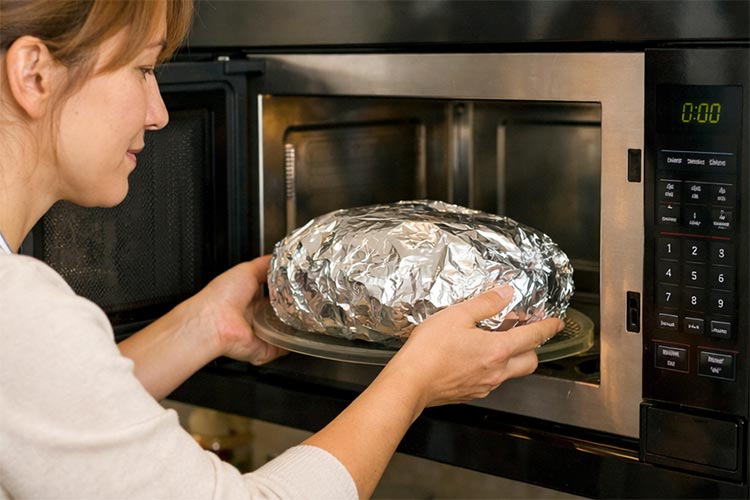
In daily cooking, many people often find themselves in a dilemma: when heating food in the microwave, covering it with plastic wrap may release harmful substances, while using a plate will leave it undercooked. They want to use aluminum foil to cover the parts prone to burning, yet have heard that doing so can cause sparks and even damage the microwave oven. Opinions on “whether aluminum foil can go in the microwave” vary widely—some claim it should never be used, while others say occasional use is harmless. In fact, the answer is simple: aluminum foil is not entirely off-limits in the microwave; the key lies in mastering the correct usage. Used properly, it can enhance heating results; used incorrectly, however, it poses serious safety risks.
To grasp this key point, we first need to understand how microwaves work and the properties of aluminum foil. Microwaves heat food by emitting high-frequency waves that stimulate the rapid vibration of polar molecules—such as water and fat molecules—in the food. The friction and collision between these molecules generate heat, enabling heating from the inside out. Simply put, it is “heating through vibration,” and microwaves must penetrate the food to be effective. As a metallic material, aluminum foil’s most notable trait is that it does not absorb microwaves; instead, it reflects them entirely, much like a mirror reflects light. This is the root cause of the potential dangers associated with its use.
When aluminum foil is improperly placed in the microwave, dangers are likely to follow. The reflected microwaves, unabsorbed by the food, bounce around inside the oven, repeatedly striking the walls, door, and microwave emitter (magnetron). This causes the magnetron to overload and its temperature to rise sharply, which can burn it out over time, shorten the oven’s lifespan, or even damage the appliance entirely. More dangerously, aluminum foil is thin with sharp edges—folded, curled, or warped areas concentrate microwave energy intensely, leading to a phenomenon called tip discharge, similar to the sparks produced when taking off a sweater in winter. This visible “miniature lightning” reaches extremely high temperatures, capable of igniting not only the aluminum foil itself but also the oil in food, creating a fire hazard. This is the primary reason many people warn against using aluminum foil in the microwave.
This does not mean, however, that aluminum foil and microwaves are “natural enemies.” The U.S. Food and Drug Administration (FDA) clearly states that aluminum foil can be used for auxiliary heating in microwaves, provided that strict guidelines are followed. The instruction manuals of many microwave brands also outline the correct way to use aluminum foil. In daily life, using aluminum foil appropriately can solve many heating problems: wrapping the tips of chicken wings while cooking prevents them from burning; covering the edges of thick pancakes or bread when heating avoids dryness and hardness; and gently covering the surface of braised dishes when reheating reduces soup splatters and ensures more even heating.
To use aluminum foil safely in the microwave, it is crucial to remember the following “five golden rules”—none of which can be overlooked, as even a minor mistake could lead to safety hazards. First, keep it flat: Aluminum foil must be laid smoothly and pressed tightly against the surface of the food, with no folds, curls, or warped edges. These uneven areas are prone to concentrating microwave energy, which can trigger tip discharge and other dangerous situations. Second, minimize the covered area: Only use foil to cover the specific parts that are likely to burn (such as chicken wing tips or the edges of bread and pancakes), and ensure the foil covers no more than one-third of the food’s total surface. Excessive foil will reflect too much microwave energy, overloading the magnetron and damaging the appliance. Third, avoid contact with the oven interior: The aluminum foil must never touch the microwave’s walls, door, ceiling, or any internal components, as direct contact can cause sparks, short circuits, or even permanent damage to the microwave. Fourth, prefer thick aluminum foil when available: Compared to thin foil, thicker aluminum foil is more rigid, less likely to curl or warp during heating, and thus reduces the risk of sparking. Fifth, monitor closely at all times: Never leave the microwave unattended while aluminum foil is inside. If you notice sparks, unusual noises, or a burning smell during heating, stop the microwave immediately, turn off the power, and remove the foil before inspecting the appliance.